

Ways to prevent loosening of bolts
A threaded assembly is a mechanical process that joins multiple parts using threaded components such as screws, threaded rods, or studs. There are different variations of threaded assemblies, including screw assemblies, bolted assemblies, and stud assemblies.
In screw assemblies, the threading of the screw enters the tapped hole of a piece, ensuring the connection between the elements.
Bolted assemblies involve the screw passing through holes in the pieces to be assembled, with its threading engaging the tapped hole of a nut.
In stud assemblies, a stud is threaded into the tapped hole of a piece, and a nut is used to assemble the pieces.
The primary function of the screw in these assemblies is to hold the parts together by applying pressure, known as preload. This preload is achieved by creating tension in the screw during its elongation during assembly.
The most commonly used method to generate this tension in the screw is rotation. The helix of the thread induces axial movement, commonly referred to as screwing. When the head of the screw or the nut comes into contact with the stack of parts to be assembled, the screwing effort causes the elongation of the screw and, to a lesser extent, the compression of the contact surfaces.
The screw, acting like a spring, develops an internal tension that creates the assembly force.
The energy provided by the tool during torque tightening generates several effects:
Friction under the screw head or nut (50% of the torque tightening force is lost in friction under the screw head or nut)
Friction in the threads (40% of the torque tightening force is lost in thread friction)
Elongation of the screw, creating tension in the assembly (only 10% of the tightening force is translated into assembly preload)
Frictions account for 90% of the energy involved in screw tightening
Various studies demonstrate that frictions constitute approximately 90% of the energy involved in torque tightening, highlighting the crucial importance of controlling and reducing frictions to enhance the efficiency of threaded assemblies. Experience shows that optimal friction management remains a complex and highly theoretical task, and even by optimizing the torque, achieving satisfactory preload in the assembly remains challenging.
Faced with these challenges, an alternative approach emerges, focusing on the use of a tensioning method. This is where the innovative solution proposed by the TRAXX company comes into play. This method aims to overcome the limitations associated with frictions by favoring an approach based on the ultrasonic bolt load measurement and control of assembly tension.
With its high-standard ultrasonic bolt tension meter devices, TRAXX presents an innovative approach centered on ultrasonic bolt load measurement. This approach enables the circumvention of constraints related to friction, providing the opportunity to attain a reliable and precise preload This strategy opens up interesting prospects for significantly improving the efficiency of screws and optimizing the performance of mechanical assemblies in various industrial contexts.
The primary causes of bolt loosening
Vibrations: Fasteners exposed to vibrations can gradually loosen due to small relative movements and load variations. This creates short-term frictionless conditions, leading to the unscrewing of the nut or bolt.
Thermal cycling: The expansion and contraction of metals in response to temperature changes can cause the loosening of a bolted assembly. Preload variations due to bolt length changes can result in joint relaxation. In some cases, heating a frozen fastener can be used for loosening.
Over tightening: It is crucial to adhere to specifications during installation, as over-tightening of nuts and bolts can damage threads, negatively impacting the performance of the fastening. Excessive tightening pushes the bolt into the plastic deformation range, rendering it ineffective in providing preload.
Under tightening: A bolt must be tightened adequately to be effective. The applied preload acts as a clamping force. Under-tightening can lead to rotation and loosening of the fastener due to insufficient clamping force. In tension applications, insufficiently tightened bolts can cause slippage of the attached surfaces, creating shear stress on the bolt and risking its fracture.
Damaged components: The performance of a fastener can be compromised if it is damaged, either during installation, reuse of old fasteners, or due to a manufacturing defect. Any damage can affect the tightening, leading to unwanted loosening or excessive tightening.
Poor installation conditions: The presence of dirt, grease, or lubricants can affect a fastener’s ability to maintain preload in a joint. Lubrication can result in excessive tightening, elongation, or failure of the fastener. It also reduces the required torque for a given load, increasing the risk of failure.
There are three types of stresses to which screws are subjected:
Static stresses: Easily predictable during studies, they have a limited impact on the durability of screw assemblies.
Dynamic stresses: Predictable with in-depth studies, they pose risks of loosening.
Vibratory stresses: Difficult to predict, they entail significant risks of loosening.
Understanding and addressing these factors is crucial for ensuring the reliability and longevity of bolted assemblies.
The junker test: A benchmark for loosening
The Junker test is a mechanical trial aimed at determining the point at which a bolted assembly loses its preload when subjected to a shear load induced by transverse vibrations.
Design engineers utilize the Junker test to pinpoint the moment when fastening elements, such as lock nuts, wedges, and locking washers, fail when exposed to vibrations. The data gathered from the test empowers design engineers to specify fasteners that will operate across a broad range of conditions without loosening.
Research into the causes of self-induced loosening due to vibrations in threaded fasteners spans six decades, and these causes are now well understood. Pioneering experimental research on the behavior of bolted assemblies under transverse loads, conducted by the German engineer Gerhard Junker in the late 1960s, laid the foundation for modern theories on self-induced loosening behavior.
The methodology of the Junker test and the apparatus described in his 1969 article are now known as the Junker test and have been incorporated into international fastening standards such as DIN 65151. The Junker test is the established method used to analyze the behavior of self-induced loosening in threaded fasteners, whether secured or not, under transverse loading conditions through vibration testing.
An overview of how to prevent bolt loosening
Since the widespread adoption of bolts and nuts in manufacturing processes, engineers have demonstrated great creativity, developing numerous solutions to optimize these fastening elements. Over time, a multitude of techniques has emerged, each aiming to address specific needs.
Presently, several of these technical solutions remain relevant and are widely employed in the industrial field. These solutions can be grouped into distinct families, each with specific nuances based on its mode of action. These categories encompass various approaches aimed at enhancing the efficiency, reliability, and versatility of bolts and nuts while preventing loosening.
Thread Locking Compounds:
Description: Thread locking compounds are adhesive materials applied to threaded fasteners, creating a secure bond that prevents self-loosening.
Application: Widely used in applications where vibrations and dynamic loads are common, such as automotive and machinery assemblies.
Nord-Lock Washers:
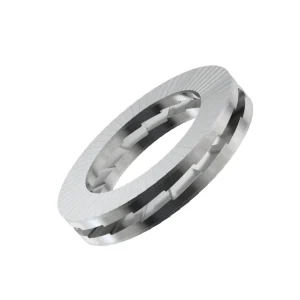
Description: Nord-Lock washers feature a unique wedge-locking design that secures the bolted joint under dynamic conditions, preventing spontaneous loosening.
Application: Suitable for critical joints exposed to heavy vibrations or dynamic loads, offering increased reliability.
Pre-Applied Thread Adhesives:
Description: Thread adhesives applied during the manufacturing process provide a reliable and consistent solution to prevent bolt loosening.
Application: Commonly used in the production of high-precision equipment and machinery.
Double Nut Arrangements:
Description: Using two nuts tightened against each other creates a self-locking mechanism, enhancing resistance to loosening.
Application: Found in various applications where vibration resistance is crucial, such as aerospace and structural engineering.
Safety Wire Techniques:
Description: Safety wire is threaded through specially drilled holes in the bolt and secured to prevent rotation and loosening.
Application: Often employed in critical safety applications, such as aviation and racing.
By understanding and strategically applying these techniques, engineers can effectively mitigate the risk of bolt loosening, ensuring the longevity and reliability of bolted joints in diverse industrial settings.
Increasing friction under the screw head
To counteract the loosening phenomenon, one approach involves artificially increasing the friction under the screw head using various devices such as serrated washers, fan washers, serrated flange nuts, conical washers, or CS washers (serrated conical washers). These solutions have the advantage of being effective in static situations while remaining cost-effective. However, they come with several drawbacks, listed below:
Average Dynamic Effectiveness:
Description: While these devices are relatively effective under static conditions, their efficiency may decrease when subjected to dynamic loads, limiting their applicability in environments prone to movement or variable loads.
Ineffectiveness Against Vibration:
Description: These solutions prove ineffective against vibrations, a common factor in many industrial applications. Their inability to resist vibrational forces can compromise the stability of assemblies over time.
Failure to Preserve Preload:
Description: Despite their ability to increase friction, these devices fail to maintain preload, the sole significant parameter ensuring the stability and strength of assemblies.
Increase in Torque Requirement:
Description: The use of these solutions leads to an increase in the torque required for tightening, which can complicate the assembly process and require adjustments in installation procedures.
Increased Preload Dispersions:
Description: The inherent variations in these devices can result in significant pre-load dispersions, potentially harming the consistency and reliability of assemblies.
Multiplication of Solutions/Items:
Description: The diversity of these devices requires complex stock management and appropriate selection based on the specific requirements of each application, leading to a proliferation of references and associated costs.
Non-Reusable:
Description: In many cases, these solutions are not reusable after disassembling an assembly, leading to additional costs associated with frequent replacement of these specific fasteners.
Considering these drawbacks, it is crucial to account for the specific requirements of each application to choose the most appropriate solution while minimizing potential compromises.


Enhancing thread friction in the screw
To counteract the loosening phenomenon, one approach involves increasing friction in the screw’s thread using various devices such as nuts with nylon inserts, slotted nuts, pinched nuts, and deformation nuts.
These solutions have the advantage of being effective in both static and dynamic situations, in addition to being cost-effective. However, they come with several drawbacks, outlined below:
No solution for threaded screws (without nut):
Description: These solutions are not applicable to screws directly inserted into a threaded hole without the use of a nut, limiting their scope of application.
Average vibrational efficiency:
Description: While they offer satisfactory efficiency in static and dynamic conditions, these solutions are only moderately effective against vibrations, which may impact their utility in environments prone to vibrational movements.
Inconsistent performance with standard imported products (nylon inserts):
Description: In the case of nylon inserts, performance may vary with standard imported products, introducing uncertainty regarding the quality and reliability of these devices.
Failure to preserve preload:
Description: Despite their ability to increase friction, these devices fail to maintain preload, a crucial parameter for ensuring the stability and strength of assemblies.
Increase in torque requirement:
Description: The use of these solutions leads to an increase in the torque required for tightening, which can complicate the assembly process and necessitate adjustments in installation procedures.
Increased preload dispersions:
Description: The inherent variations in these devices can result in significant pre-load dispersions, potentially harming the consistency and reliability of assemblies.
Multiplication of solutions/items:
Description: The diversity of these devices requires complex stock management and appropriate selection based on the specific requirements of each application, leading to a proliferation of references and associated costs.
Increase in torsion in the screw:
Description: The introduction of these devices can increase torsion in the screw, impacting stress distribution and potentially affecting the durability of the assembly.
Partial reusability:
Description: In many cases, the possibility of reusing these devices after disassembling an assembly is limited, resulting in additional costs associated with the frequent replacement of these specific fasteners.
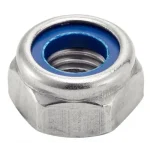
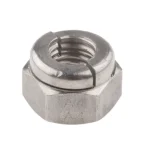
Jam nuts
The jam nut is a frequently employed solution to prevent loosening in assemblies subjected to various stresses. Its principle is based on creating internal stress resulting from the torque formed by the nut and the jam nut. This stress “locks” the threads of each nut against those of the screw, acting as a play-catching mechanism.
While this method offers relatively good resistance to dynamic stresses, it has limitations when faced with intense vibrations that may eventually overcome the jam nut. Moreover, implementing this solution requires specific skill, with a high risk of adding preload after tightening the first nut, often leading to overtightening of assemblies.
Here is a list of drawbacks associated with using jam nuts:
Moderately effective under vibrational stress: Although this method may provide some resistance to vibrations, its effectiveness is limited under intense vibrational conditions.
Inconsistent performance, heavily dependent on the procedure and the operator: The performance of this solution varies significantly depending on the operator, making repeatability challenging.
Delicate implementation with two wrenches: Executing this technique requires skillful handling of two wrenches, which can be tricky, especially in confined or challenging access environments.
Manual operation, impossible with motorized screwing tools: Tightening the jam nut and the nut is a manual operation, which can be time-consuming and makes it impossible to use motorized screwing tools, thus limiting the efficiency of the process.
Doubles the assembly time due to tightening two nuts: The necessity to tighten two nuts for each assembly significantly increases the assembly time, which can be restrictive in applications requiring high production efficiency.
In summary, while the jam nut can provide an effective solution in certain situations, its drawbacks in terms of operational complexity, operator dependence, and increased assembly time may warrant exploring other alternatives for mechanical assemblies.

Application of adhesives on bolts
To counter the loosening of a bolt, the idea of using adhesives (glues) emerges as a universal solution, applicable not only with screws, studs, threaded rods, and tap holes but also with nuts. While this approach may seem straightforward and widely adopted, it is important to note that the inappropriate use of adhesives can lead to more disadvantages than advantages.
The use of adhesives requires meticulous surface preparation and a thorough understanding of their condition. Indeed, the performance of adhesives varies based on many more or less predictable parameters, such as surface roughness, clearances, materials, lubrication, temperature, humidity, etc. Managing so many parameters makes it challenging to achieve reliable repeatability for the safety of an assembly.
Moreover, the curing time of adhesives can range from a few hours to several days, limiting the possibility of a quick startup of the mechanism.
While this solution has advantages, such as static efficiency, some effectiveness in dynamic conditions, relative sealing, and economic cost, it also has several disadvantages:
Moderately effective under vibrational stress: Adhesives have limited effectiveness against vibrations, which can affect their performance in environments prone to vibrational movements.
Inconsistent performance with too many influential parameters: Variability in performance due to the multitude of parameters can make consistent prediction of assembly integrity challenging.
Sometimes difficult disassembly: Disassembling bonded parts can be complex, leading to difficulties during maintenance or component replacement.
Does not preserve preload: Adhesives do not guarantee the maintenance of preload, a crucial characteristic.
Highly polluting: Once bonded, the screw becomes difficult to recycle, posing a significant environmental issue.
Containers are highly polluting: Adhesive containers may present considerable environmental risks in terms of pollution.
Operator risks in case of contact: The use of adhesives can pose health risks to operators in case of contact, requiring appropriate precautions.
In conclusion, while adhesives offer advantages, their use requires careful attention to details and a rigorous evaluation of potential trade-offs.
Nord-Lock washers
The self-locking washers equipped with ramps, represent a technology that directly influences the preload to be maintained, ensuring the preservation of the elongation of the screw even in the presence of dynamic loads or intense vibrations. This technology is primarily embodied through self-locking washers with ramps.
The effectiveness of this method relies on several key aspects. Firstly, it proves to be efficient in static, dynamic, and vibrational conditions, making it a versatile solution. It offers a variety of solutions in the market, suitable for both screws and nuts. Furthermore, this approach has a limited number of references and is reusable, contributing to a more efficient management of components. Another notable advantage is its origin in high-quality European production, ensuring increased reliability.
However, there are a few drawbacks to consider in the application of this method:
- Limited to two European manufacturers: The availability of this technology is limited to only two manufacturers, which may restrict options and competitiveness in the market.
- Component costs: The components associated with this method can be relatively expensive, impacting the overall cost of the assembly. Therefore, a careful cost evaluation compared to the benefits offered is necessary when adopting this technology.
Despite these drawbacks, this method remains an interesting option due to its diverse performances and its ability to meet various assembly requirements. However, a thorough analysis of costs and available alternatives is recommended in the selection process.
TRAXX: an alternative for controlling bolt loosening
To address bolt loosening issues, two common practices are currently adopted in the industry:
Periodic Disassembly and Reassembly: This involves the periodic disassembly and reassembly of either the entire set of assemblies (as seen in refinery applications) or a portion of installations (constituting approximately 20% of bolted assemblies in the wind energy sector) each year. This method is labor-intensive, repetitive, and, admittedly, somewhat antiquated.
Torque Re-tightening Method: This method involves slightly loosening the assembly before subsequently retightening it. During the retightening process, it may impose a higher tension on the stud compared to its initial state, risking exceeding the stud’s elastic limit and causing plastic deformation.
In both cases, the use of a bolt tension meter device significantly streamlines and enhances maintenance. Why? Because with the TRAXX method, there’s no need to disassemble the assemblies. It’s a non-intrusive approach that allows for the measurement of tension between two components by simply placing a sensor on the assembly’s bolts, enabling immediate detection of any loosening.
Therefore, with TRAXX devices, it becomes possible to monitor the evolution of tightening tension over time (1 month, 5 years, 10 years). By comparing the initial tightening data with those obtained at a specific point, such as during the first maintenance cycle, it is easy to detect any loosening or anomalies in the assembly.
In this context, the TRAXX-M2 device becomes a tool for controlling loosening, tracking, and long-term monitoring of assemblies.
