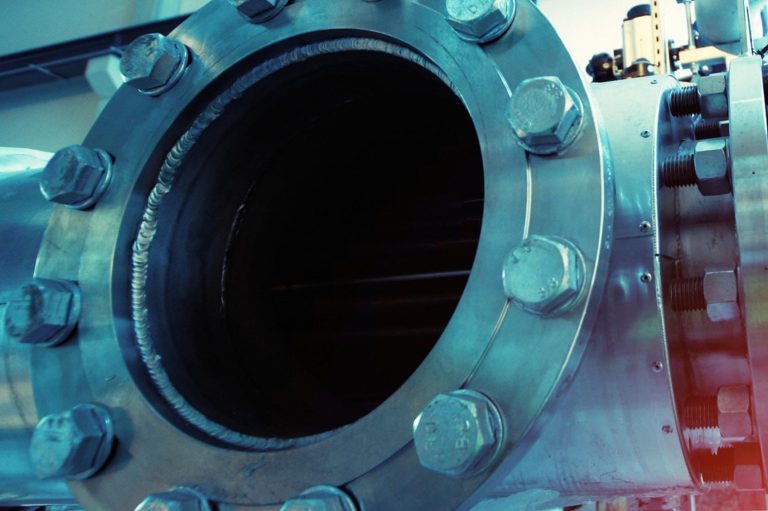
What happens if I tighten below bolt preload ? When a bolted joint is not tightened to the recommended bolt preload, it can lead to several types of failures. The purpose of bolt preload is to create a clamping force that keeps the joined parts securely together, preventing them from separating under an applied load. If this clamping force is insufficient, the joint may fail in several ways, including loosening, fatigue failure, and slippage.
⚙️ What happens if I tighten below bolt preload ?
Before answering the question ‘What happens if I tighten below bolt preload?’, let’s first go back to the definition of bolt preload to better understand the problem.
Bolt preload is the initial tension force that is applied to a bolt when it is tightened. This tension creates a compressive force, or clamping force, that holds the joined parts together. Think of it like a very strong clamp. The clamp force is what actually transmits the load between the parts, not the bolt itself. The preload should be carefully calculated and applied to ensure the joint functions as intended. The ideal preload is usually a high percentage of the bolt’s yield strength, often around 75%. This ensures a strong, reliable joint that resists loosening and fatigue.
⚙️ What happens if I tighten below bolt preload : Consequences of Under-Tightening
You may ask yourself: What happens if I tighten below bolt preload ? Here are three main reasons that explain it:
1. Joint Loosening
Joint loosening is the most common and immediate consequence of under-tightening. Without sufficient preload, the joint is susceptible to vibration, thermal cycling, and dynamic loads. These forces can cause the nut and bolt to rotate, reducing the already low clamping force. As the joint loosens, the parts may separate, leading to a complete failure of the assembly. . This can be particularly dangerous in machinery, vehicles, and other critical applications where a loose part could cause a catastrophic failure.
2. Fatigue Failure
Fatigue failure is another serious consequence of under-tightening. A properly tightened bolt carries the applied load in a static, pre-tensioned state. The bolt’s stress range—the difference between the maximum and minimum stress it experiences—is kept small. However, when a bolt is under-tightened, the applied external load is transmitted directly to the bolt. This causes a large fluctuation in the bolt’s stress level with each load cycle. Over time, these repeated cycles can cause microscopic cracks to form and grow, eventually leading to a brittle fracture of the bolt, even if the applied load is well below the bolt’s ultimate tensile strength. .
3. Joint Slippage
When the clamping force is insufficient, the joint may slip. Slippage occurs when the applied external load, particularly a shear load, overcomes the friction between the clamped parts. This can cause the parts to move relative to each other, leading to misalignment, wear, and potential damage to the components. In some cases, this slippage can cause the bolt to take on the shear load, which it is not designed to do. Bolts are designed to handle tension loads, and subjecting them to shear can lead to bending or breaking.
How to prevent under-tightening with TRAXX-M2
Under-tightening is a common problem in many industries, but it can be easily prevented with the right tools. The TRAXX-M2 device is a solution designed specifically to ensure correct bolt preload is achieved every time, eliminating the risks associated with under-tightening. With the TRAXX-M2 device, you no longer need to ask yourself: what happens if I tighten below bolt preload?
The TRAXX-M2 system uses advanced technology to measure and control the bolt tension during the tightening process. Unlike traditional torque wrenches that measure torque (a proxy for tension), the Traxx-M2 directly measures the axial tension in the bolt. This direct measurement is far more accurate and reliable, as it accounts for variables like friction in the threads and under the bolt head, which can cause significant errors with torque-based methods.
By using the Traxx-M2, you can be confident that every bolt in your assembly is tightened to the exact specified preload. This prevents the costly and dangerous consequences of under-tightening, such as loosening, fatigue, and slippage. The device provides a real-time, digital readout of the tension, and it can be programmed to stop the tightening process once the target preload is reached. This ensures consistency and quality control across all your bolted joints, leading to safer, more durable products and machinery.
With Traxx-M2, you are not just tightening bolts; you are ensuring the structural integrity and longevity of your entire assembly.