Tension tightening: a new standard in many industries

The tension tightening process is becoming standardized in industry. Today, industry is undergoing a major conceptual change in the field of mechanical assembly. Torque tightening, the traditional method of tightening mechanical assemblies, is becoming obsolete. If you haven't yet discarded your torque wrench, now is your last chance...
Controlled tension tightening

This method not only provides obvious gains in performance and precision but also opens up new possibilities in the field of bolted joints. For example, it is now possible to monitor the tightening of an assembly over time.
 
We can now monitor the behavior of a bolted assembly in real-time and easily track the life of a bolted assembly over several years, which is a boon for quality and maintenance services. Thus, innovative applications are emerging, and this conceptual shift implies the definition of new uses in our factories, the use of innovative tightening tools, and a profound change in the way we design assemblies.

TRAXX, a key player

One of the key players in this change is the French company TRAXX, which specializes in the design of various bolt tension measurement systems, including the current TRAXX-M2 and its variants. TRAXX has become a major player in the field of bolted joint tightening by offering high-performance tension measurement systems and a high-quality service offering.

200 threaded rods tensioned to 700 kN

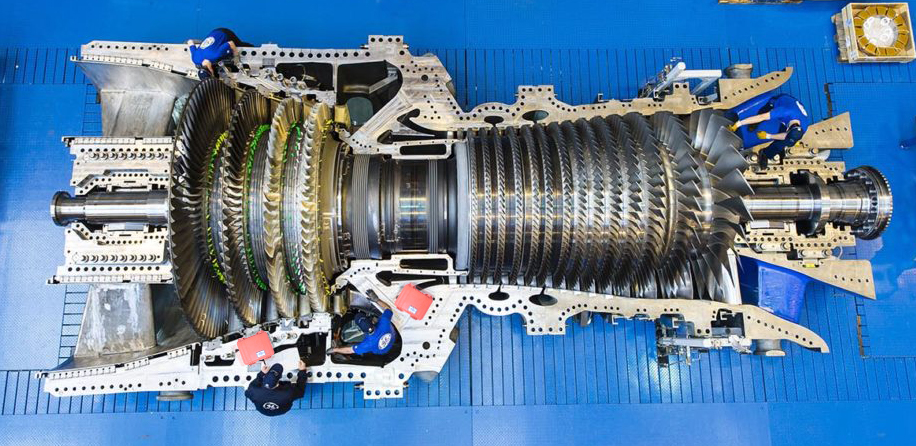
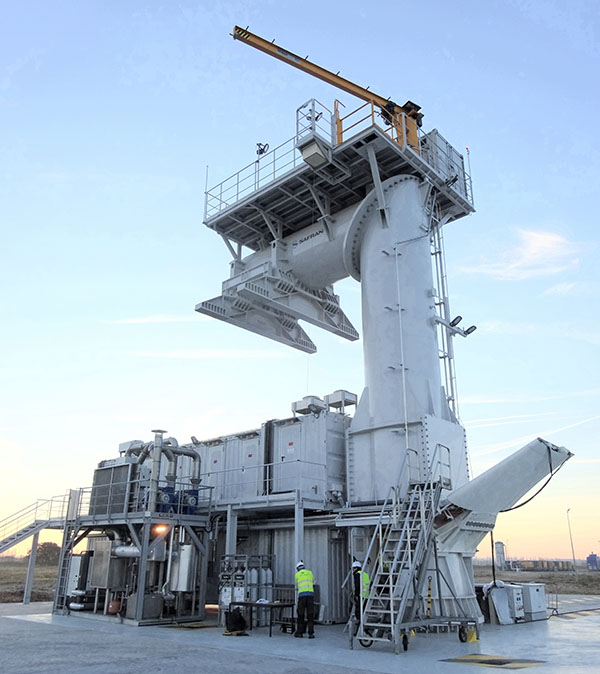
Among these services is the complete tension tightening of a bolted assembly, which involves assembling the structure under tension by controlling the tightening tool (wrench, hydraulic tensioner, etc.) according to the measured tension induced in the bolt. This is how the jet engine test bench in Istres and the GE 7HA and 9HA gas turbines were recently assembled.

In the first case, the entire structure of the Istres test bench was tightened to tension, with 200 threaded rods stretched to 700 kN with a precision of 4%. One of the advantages of reasoning in terms of tension is that it is easy to monitor the evolution of assemblies over time by checking the tension present in the rods after one year, five years, ten years. A real guarantee for the future.

Managing the tightening step by step

In the second case, the General Electric 7HA and 9HA gas turbines (500MW) are assembled using the TRAXX-M2 system and the TMS (Tightening Management Software). This software integrated into the TRAXX-M2 allows the tension tightening of the structure to be controlled step by step and supports operators in real-time during the assembly process. A true tension tightening operation management software, the TMS enables the organization and control of the assembly of bolted structures.

These two examples illustrate the potential and universality of this method, which has already won over the automotive, aerospace, energy, and transportation sectors and continues to surprise us.